Frederick Hughes
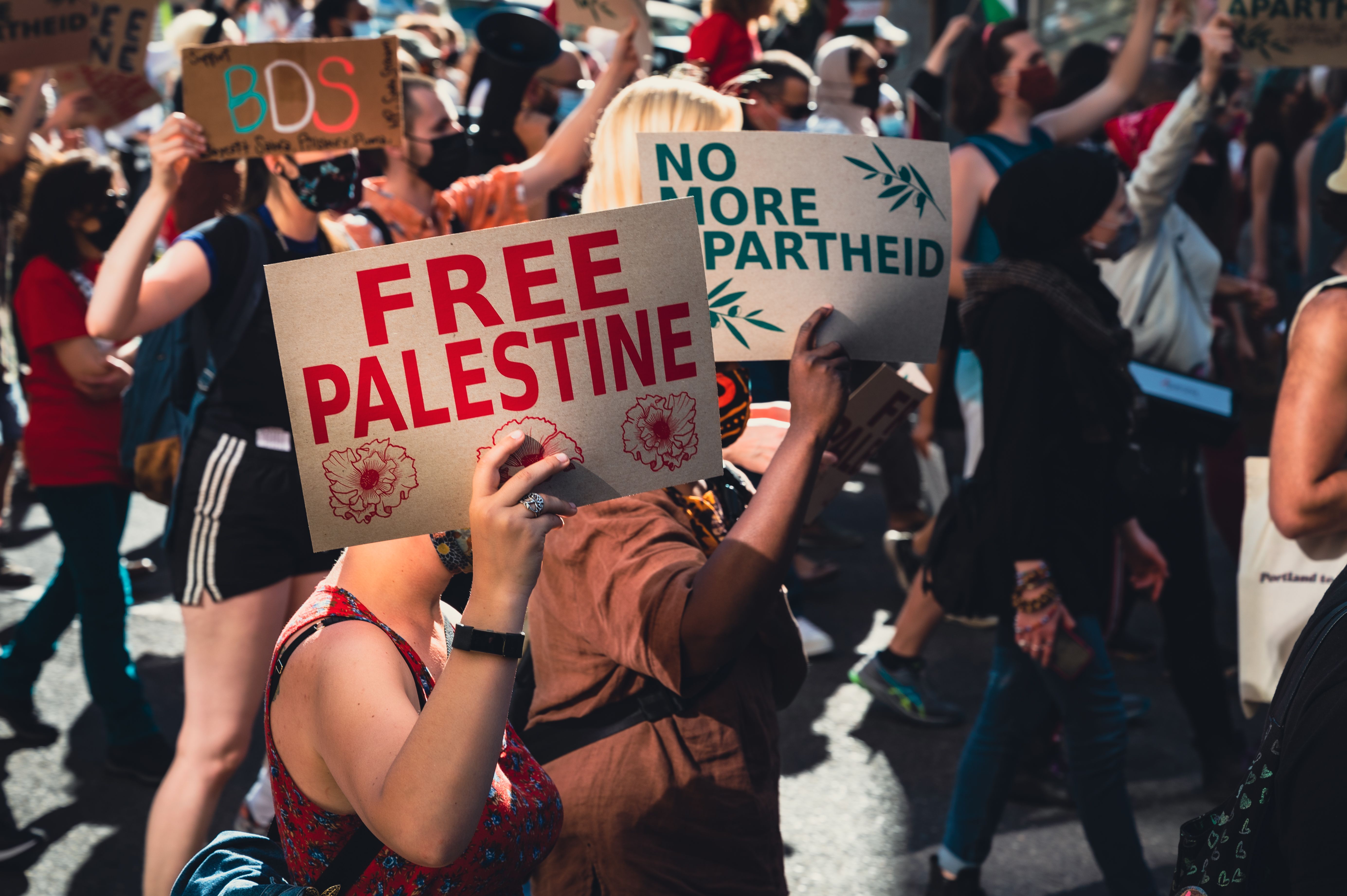
Apartheid – a term birthed in the segregation of black and white in South Africa, has left an indelible mark on the history of the country. The term has since been applied to other countries as an allegation of systemic inequality – to Cuba, China, India, and – not surprisingly – Israel.
This accusation has been made by influential bodies including the World Court and Amnesty International. Both pronouncements have sparked fierce controversy – in the case of Amnesty, even from within its own organisation. The Israel branch of Amnesty International rejected the report making the accusation of apartheid against Israel, and has since been suspended from the organisation.
What is Apartheid?
The meaning of apartheid is “separateness” in Afrikaans, The policy was developed over several centuries of British and Dutch colonial rule in South Africa, with the intent to maintain superiority over the indigenous black population. It was made official in May 1948 when the National Party – serving the interests of the white Afrikaans-speaking population – came to power. The non-white population was subject to highly restrictive rules which were often enforced with brutality. The policy came to its official end in 1994 when the African National Congress came to power for the first time. In summary, apartheid existed to preserve the interests of a minority white population, at the expense of the majority non-white population.
Subsequently the term “apartheid” has been formalised in statements from the 1998 Rome Statute to the International Criminal Court and the 1973 International Convention on the Suppression and Punishment of the Crime of Apartheid. These statements contain detailed legal definitions of the criminal nature of apartheid, but for the purposes of this discussion there are 3 main elements that the case for apartheid rests on:
- An intent to maintain domination by one racial group over another
- A context of systematic oppression by one racial group over another
- Inhumane acts
Discussion of whether the term can be applied to Israel will be made with reference to these 3 elements.
Why Israel?
The Israel/Palestinian controversy produces an inordinately high volume of news and social media traffic. Selective consumption of such media can easily produce a distorted understanding of the situation and lead the consumer to a mindset that coincides with antisemitic standpoints. The common narrative presents Israel as a colonial project whose purpose is to maintain an indigenous people in a place of disadvantage by such means as confiscation of land, denial of basic rights, and violent oppression. Such a narrative sits well with the term “apartheid”.
It is beyond the scope of this article to address every part of that narrative in detail, but centring on apartheid, it is appropriate and necessary to compare conditions in Israel against those under which the term was born. Accusers of Israel will point out that neither Amnesty nor the ICJ drew a direct comparison with South Africa in their reports, but such a comparison is clearly implied and so cannot be ignored. Amnesty’s pronouncement against Israel is made against all territories, including the recognised State of Israel. The political situation differs between the State of Israel, East Jerusalem, and the disputed territories of Gaza and the West Bank, and so the applicability of the key elements of apartheid will be considered for each region individually.
Apartheid in the State of Israel?
At the time of writing, the State of Israel has a population of around 7.8m Jews and 2.2m Arabs. All of these are Israeli citizens and consequently are subject to the same laws and share the same legal rights. The existence of equal rights among all citizens should in itself be sufficient to silence any argument. Opponents would argue that the system of equal rights is not outworked with true equity – that there are numerous cases of discrimination and exclusion. It would be naive to assert that no such cases exist, but they will also occur in most, if not all, of the other countries in the world. If this were a sufficient condition to prove apartheid then the strength of the argument would be diminished to the point of being worthless.
Given the implied comparison with apartheid South Africa, it is informative to look in detail at the comparative situations of Jewish and Arab citizens. The table below presents a summary of Arab opportunities as citizens of the Jewish-majority state, contrasted with the rights of the black population in white minority South Africa:
| South Africa | Israel | |
| Government representation | Mostly barred | Yes |
| Right to vote | Mostly barred | Yes |
| Civil positions of influence, e.g. high court judges | Politically chosen, seldom given to blacks | Yes |
| Professional opportunities | Mostly reserved for whites | Yes |
| Freedom to travel or live within country | Restricted by law | Yes |
| Inter-racial marriage permitted | Restricted by law | Yes with conditions |
It can be seen from the above that the rights situation for Arabs in Israel does not compare well with apartheid South Africa. There is no reasonable evidence that any of the key elements that define apartheid exist between Jewish and Arab citizens of Israel.
East Jerusalem
Arab residents of East Jerusalem are a special case. Many choose to describe themselves as “Palestinian” but their legal and resident status is not the same as the inhabitants of Gaza and the West Bank. Many hold Jordanian passports and are not Israeli citizens but they have permanent residency within the state (East Jerusalem is considered part of the state by Israel but this status is disputed). They also have the freedom to travel anywhere in the country, including Area A in the Palestinian territories (such as Jericho, Nablus, Ramallah). Jewish Israeli citizens are legally forbidden to enter these areas.
East Jerusalem residents have access to a substantial level of rights and services, but not fully equal to Israeli citizens. They also do not have the right to vote. They are subject to checkpoints when transiting between East Jerusalem and the West Bank, but have the legal right to travel. Arab neighbourhoods have a degree of self-rule but under the overall jurisdiction of the Israeli government.
There are many complaints about unequal treatment and the prioritisation of Jewish over Arab neighbourhoods. The validity of these would require more investigation than is possible in this discussion, but the question again is whether the existence of these inequalities is sufficient to justify the charge of apartheid – given the level of rights that are afforded to East Jerusalem residents.
West Bank and Gaza
The West Bank and Gaza are where the majority of controversy surrounding Israeli presence and influence is centred. They are commonly referred to as the “Occupied Territories”, accusing Israel of maintaining an illegal military occupation of the regions, and denying self-rule to the Palestinian inhabitants. Before addressing the subject of apartheid, it is necessary to examine the meaning and accuracy of these terms.
At the end of the 1948 war triggered by Israel’s declaration of statehood, the West Bank was occupied and annexed by Jordan, and Gaza occupied by Egypt. This situation continued until the 1967 war, when Israel captured the regions from Jordan and Egypt. From 1967 until the present, these areas have been under what is commonly referred to as “illegal occupation”. To a superficial observer, this terminology invokes a picture of military presence and rule throughout the regions. Once again, the reality is more complex.
Israel has maintained a presence in both regions, except for the period from 2005 to 2023 when Israel withdrew all military and civilian presence from Gaza. A security barrier has been maintained around Gaza throughout that time, and a naval blockade at sea. These have been kept in place for security reasons. Until October 2023, Palestinian workers were allowed to transit from Gaza into Israel on a daily basis. This access was revoked after October 7th 2023 as an ongoing security measure.
The picture in the West Bank is a mix of conflicting claims and ideologies. Approximately 530,000 Israeli citizens live in established towns or “outposts” in the West Bank. Almost all of these are in Area C – the largest element of land in the West Bank region, which is governed and secured by Israel. This is distinct from Area A (Palestinian government and security) and Area B (Palestinian government/Israeli security). Since the 1967 war, various negotiations have been held between Israel and the Palestinian Authority (and previously the
Palestinian Liberation Organisation) with a view to agreeing a two-state solution to the Palestinian problem. Every such effort has failed, with the reasons cited including unwillingness of the PA to accept boundary designations, continued Israeli settlement expansion, etc. Consequently the situation remains unresolved, with the Palestinian territories in an indeterminate position regarding statehood. The “State of Palestine” has Observer status in the UN, and has been recognized by a number of countries, though it has never been formally admitted to the UN as a Member state with voting rights.
Events in the West Bank which are considered most newsworthy tend to be those where Israel can be presented as the “bad actor” in the situation. Fringe groups of settlers perpetrating violence toward Palestinians in the West Bank can be used as evidence of oppression and displacement in support of the case for apartheid. The settler activity is also condoned by fringe elements of the government. However the percentage of Israelis participating in these actions is a tiny minority and does not represent the view of the majority of citizens or government.
Currently Israeli settlers in the West Bank region are subject to Israeli law, whilst Palestinians are under the legal system of the Palestinian Authority. Critics will argue that this differential in legal and administrative terms constitutes apartheid. However, a view on this cannot be formed without acknowledging the other factors – security concerns (which have been proven necessary frequently) and the unresolved status of the territory.
There has been endless publicity surrounding “inhumane” actions by the Israeli government or the IDF, particularly in relation to Gaza since October 2023. Genuinely inhumane treatment of Palestinians should be addressed and prevented, as in any other country. However, a key difference between Israel and South Africa is that the “inhumane” treatment has been in the context of a war – against an enemy which refuses to engage in symmetric warfare but instead turned the urban landscape into the battlefield – including places like hospitals and schools. The publicity often makes only a passing acknowledgement of the truly inhumane actions and intentions of the Hamas invaders on October 7th. For those advocating Israeli withdrawal to pre-1967 borders, this is a lesson which should be taken very seriously indeed.
So is Israel Apartheid or not?
The apartheid allegation makes a sweeping claim about a complex and territorially fragmented conflict. Arab citizens of Israel, permanent residents of East Jerusalem, Palestinians in the West Bank and Palestinians in Gaza live under different legal and political arrangements. Serious discrimination, inequality and abuses should be acknowledged and addressed, but the evidence and arguments for the specific international crime of apartheid must be examined carefully rather than assumed.
In addition, the question is not simply “Is Israel an apartheid state?” but also “Why is Israel singled out for this label?”. Conflict, displacement, and oppression are occurring at the same time in many other parts of the world. Similarly most, if not all countries in the world have a degree of inequality in their society. Equal rights within a society often does not equate to equal opportunity. Neither this, nor acts of injustice perpetrated by a minority or condoned by a faction within a government constitute an overall policy of apartheid.
The fact that Amnesty’s Israel branch rejected the accusation of apartheid and was itself in turn suspended must surely raise questions about the impartiality of this allegation.
Given the lack of an indisputable case against Israel in terms of the key elements of apartheid, it would seem that the term falls into the same category of terms such as “colonialism”, “genocide”, and others. Such terms have become weaponised and are used in an imprecise way with the primary intent of delegitimising Israel.

Leave a Reply