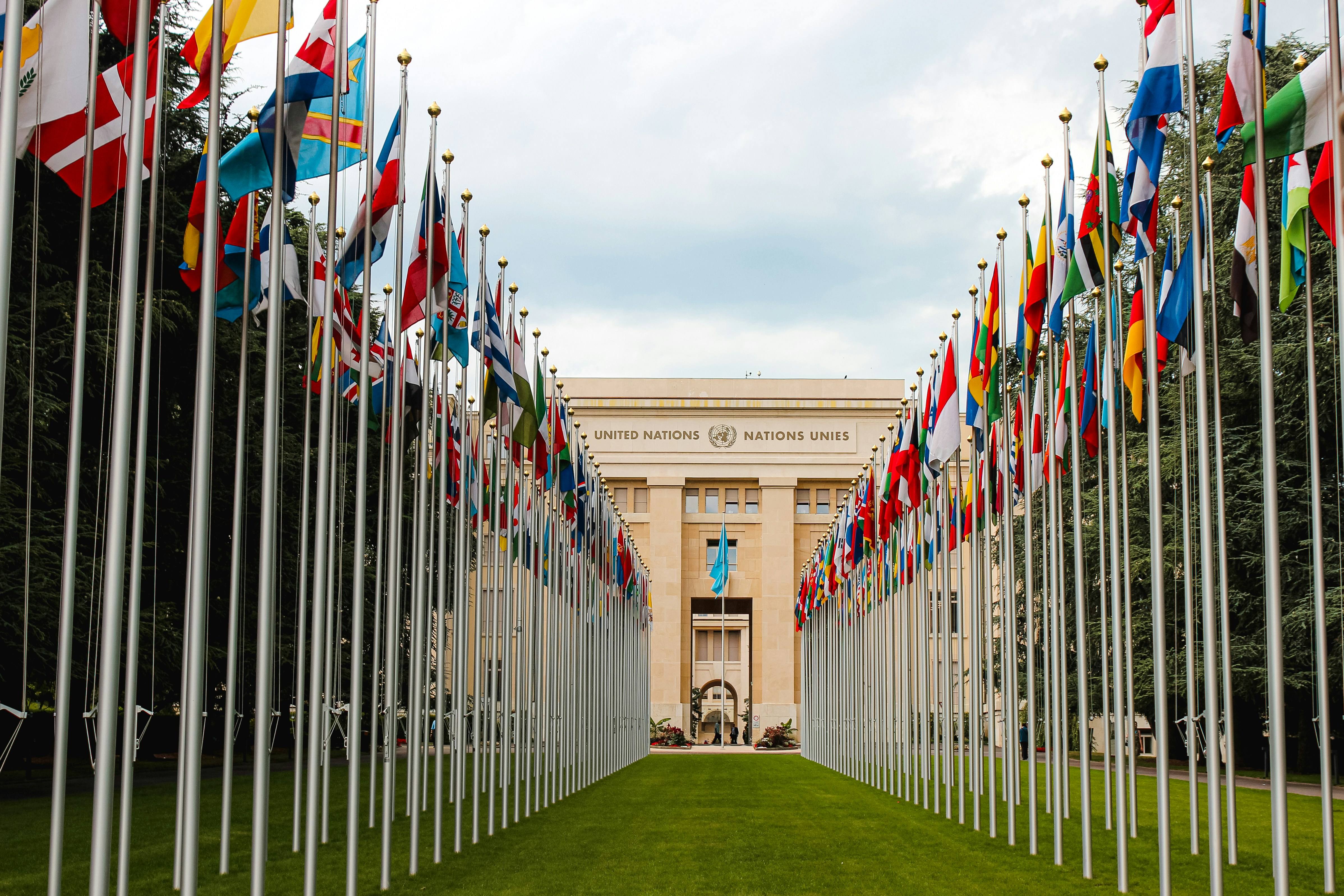
The United Nations General Assembly is, above all, a place where nations come to speak.
On 24 September, African leaders and representatives had their opportunity to do exactly that. They addressed the world on matters ranging from Africa’s place in the international order to development, inequality, peace and security. They made their cases. The world listened.
Then Israel’s turn came.
As Prime Minister Benjamin Netanyahu approached the podium, dozens of delegations left the General Assembly chamber in protest. African countries were among those whose representatives walked out or were absent, although the available reporting does not establish if every African country listed as absent actually walked out at that moment.
The question this raises for Africa is not whether its governments agree with Netanyahu. They are perfectly entitled to disagree with him.
The question is this: if Africa came to the United Nations to speak and be heard, why could it not allow Israel the same opportunity?
Remaining in a room while someone speaks does not mean agreeing with what that person says. Diplomacy, by its very nature, requires us to listen to people with whom we disagree. Indeed, the United Nations exists precisely because the world’s nations do not see eye to eye.
Netanyahu’s speech may have been deemed controversial in some quarters. He defended Israel’s military actions, rejected accusations of genocide in Gaza, defended the US-Israeli campaign against Iran and confronted critics of Israel. He also spoke to Israel’s security concerns, the threat posed by Iran and the broader implications for regional and global security.
But beneath these arguments lay questions of fundamental moral importance: a nation’s right to protect its citizens, the responsibility of leaders to safeguard their people, and the challenge of pursuing security in a world where the costs of conflict are borne by ordinary civilians.
Some may disagree with Netanyahu’s assessments or conclusions. But disagreement should not preclude attentive listening, particularly when a leader is articulating concerns that he believes are vital to his country’s survival. He has every right to do so.
The same principle applies to Africa: delegates should be able to question a speaker’s position without denying him the opportunity to be heard.
Today, African leaders have divergent views about the war in Gaza. South Africa, for example, has adopted one of the most critical positions toward Israel on the continent. Ghana has supported Palestinian statehood and a two-state solution while also taking its own position on Hamas and the conflict. Kenya, meanwhile, has been among the African countries whose representatives were reported as leaving or being absent during Netanyahu’s address.
But here’s an important truth.
If Africa wants the international community to listen when African leaders speak about the reform of the UN Security Council, Africa’s development challenges, climate change, trade, debt and global inequality, then surely it should demonstrate the same commitment to listening when another country takes the floor.
This is particularly relevant to Africa’s relationship with Israel. As I argued recently in this publication, the relationship between Africa and Israel has undergone a gradual transformation. After the diplomatic rupture that followed the 1973 Yom Kippur War, relations gradually returned. Today, Israel maintains diplomatic relations with more than 40 African countries, with cooperation extending across agriculture, water, healthcare, cybersecurity, renewable energy and innovation.
Though the Gaza war has complicated that relationship, the resulting complexity makes dialogue more important, not less. Committed, transparent dialogue can create a myriad of possibilities.
Africa deserves to be heard at the United Nations. Israel deserves to be heard. And the rest of the world deserves the opportunity to hear all.

Leave a Reply